


Madison County is close to home for me.
I have litigated dozens of nursing-home cases in Madison County, and one of the most important nursing-home trials of my career took place in Madison Circuit Court.
Of that amount, $4.5 million was specifically awarded for violations of Mrs. Jennings’s rights under Kentucky’s nursing-home Residents’ Rights Act, KRS 216.515. Another $4 million was awarded for physical pain, mental anguish and loss of enjoyment of life, and the jury awarded $9.5 million in punitive damages.
Her name was Eliza Jennings.
Mrs. Jennings was an elderly woman who spent the final years of her life in a Berea nursing home (the Berea Terrace). By the time the case reached a Madison County jury, the evidence involved a Stage 4 pressure injury, severe contractures, malnutrition, dehydration, infections, failures in basic care, and violations of Kentucky nursing-home residents’ rights.
The jury returned an $18 million verdict.
That verdict was later set aside after the Kentucky Supreme Court changed the law governing residents’ rights claims in Overstreet v. Kindred Nursing Centers. I explain that history below because families deserve the whole story.
But nothing about what happened afterward changes what that trial taught me about investigating a nursing home.
Especially this:
Some of the most important decisions affecting a nursing-home resident are never made at the bedside.
They are made in budgets.
Staffing plans.
Purchasing decisions.
Management meetings.
And sometimes a decision that looks small on a spreadsheet can become devastating when it reaches a resident’s room.
If someone you love has been seriously injured or has died after suspected neglect in a Richmond, Berea, or Madison County nursing home, call (859) 413-3900 for a free consultation.
The Eliza Jennings Case Was About More Than a Bedsore
Mrs. Jennings suffered terrible physical deterioration.
Public reporting from the trial described bone-deep pressure wounds, infections and severe contractures. The Kentucky Trial Court Review reported that she developed pressure sores involving her lower back, heels and thigh and that contractures became so severe that her fingernails dug into her hands.
But if you reduce the case to:
“She developed a bedsore.”
you miss the point.
The case was about how a human being reached that condition while living in a facility that was supposed to care for her.
Why wasn’t the pressure relieved?
Why wasn’t range-of-motion care consistently provided?
Why was nutrition deteriorating?
Why was hydration deteriorating?
What did the nursing home know?
When did it know it?
What did the care plan require?
Were those interventions actually carried out?
What decisions were being made above the bedside?
Those questions are what nursing-home litigation is really about.
When Nutrition Becomes a Budget Decision
One piece of evidence from the Jennings case has stayed with me for years.
Mrs. Jennings had deteriorated to the point that nutritional supplements and health shakes were among the few forms of nutrition she would still take consistently.
Those supplements mattered.
Then came the budget.
The evidence we presented at trial was that management-level decisions reduced the money being spent on nutritional supplements and health shakes.
Mrs. Jennings stopped receiving something she had actually been willing to consume.
Think about what that means.
At the corporate or management level, it can appear to be a line item:
Nutritional supplements.
Reduce the spending.
Control the cost.
But at the bedside, the spreadsheet becomes a real person.
An elderly woman who already has difficulty eating.
An elderly woman losing weight.
An elderly woman whose body needs protein and calories to maintain muscle, protect skin, fight infection and heal wounds.
And one of the few things she will still consume disappears.
That is why we investigate nursing-home cases differently.
We do not ask only:
What did the nurse do?
We also ask:
Who controlled the resources the nurse had available?
Who set the budget?
Who made purchasing decisions?
Who knew residents depended on those products?
What happened after the money was cut?
Sometimes the path from the corporate office to the resident’s injury is much shorter than it looks.
A Stage 4 Pressure Injury Is Not Just a Wound-Care Issue
Pressure injuries are often treated as though they are isolated wound-care events.
They usually are not.
A serious pressure injury may involve:
- mobility;
- repositioning;
- nutrition;
- hydration;
- continence care;
- skin assessment;
- support surfaces;
- treatment orders;
- physician notification;
- staffing; and
- whether the care plan was actually implemented.
Mrs. Jennings suffered severe, bone-deep pressure injuries.
That forced us to reconstruct much more than wound measurements.
We had to understand the resident.
Her mobility.
Her nutrition.
Her ability to reposition herself.
Her physical decline.
The care she required.
What employees documented.
And whether the care documented on paper matched what was occurring in reality.
That approach still shapes the way I investigate pressure-injury cases today.
Contractures Can Tell a Story About Missed Care
Mrs. Jennings also developed severe contractures.
Contractures occur when joints and soft tissues become shortened and stiff, sometimes leaving an extremity fixed in an abnormal position.
In Mrs. Jennings’s case, the contractures became profound.
Evidence presented at trial included contractures of her hands so severe that her fingernails pressed into her palms.
That raises another set of questions.
What range-of-motion care had been ordered?
What did therapy recommend?
What did the nursing plan require?
Who was supposed to provide restorative care?
How often?
Was it actually done?
What did staff document?
When did the decline become obvious?
And what did the facility do once the resident began losing mobility?
Again, the injury is only the beginning of the investigation.
Malnutrition, Dehydration, and the Resident Nobody Can Afford to Ignore
Nursing-home residents often have medical problems that make eating and drinking difficult.
Dementia can affect appetite.
Stroke can affect swallowing.
Medication can affect alertness.
Illness can reduce intake.
That does not mean the facility gets to stop paying attention.
A resident whose intake is declining may require:
- meal assistance;
- fluid assistance;
- weight monitoring;
- dietary consultation;
- supplements;
- modified diets;
- swallowing evaluation;
- physician notification;
- laboratory testing;
- and changes to the care plan.
Every one of those interventions requires somebody to notice.
Somebody to act.
And frequently somebody to spend money.
That is why malnutrition and dehydration cases can become staffing cases and corporate-resource cases at the same time.
The $4.5 Million Residents’ Rights Verdict
The Jennings case is also important to me because of Kentucky’s Residents’ Rights Act.
The jury did not simply award damages for physical injury.
It returned $4.5 million in separate awards for violations of Mrs. Jennings’s statutory rights:
- $500,000 involving freedom from improper chemical or physical restraints;
- $2 million involving dignity, individuality and privacy in treatment and personal care;
- $500,000 involving the right of the resident and responsible family member or guardian to be informed about her medical condition; and
- $1.5 million involving appropriate dress, hygiene and grooming.
The jury separately awarded $4 million for pain, suffering, mental anguish and loss of enjoyment of life and $9.5 million in punitive damages.
That totals $18 million.
Those residents’ rights awards matter to me because nursing-home cases are not only about medical outcomes.
A nursing-home resident remains a person.
Dignity matters.
Being clean matters.
Being informed matters.
Privacy matters.
Freedom from inappropriate restraint matters.
Kentucky chose to put those rights into law.
Then Kentucky Law Changed
The Jennings trial lasted eight days in June 2015.
The jury found that the nursing home breached duties owed to Mrs. Jennings and that those failures were a substantial factor in causing her injuries and hastening her death.
Then something extraordinary happened.
While post-trial motions were pending, the Kentucky Supreme Court decided Overstreet v. Kindred Nursing Centers Limited Partnership.
Overstreet held that certain claims created exclusively by KRS 216.515 do not survive the resident’s death and must be brought by the resident or guardian while the resident is alive.
Mrs. Jennings had died before the lawsuit was filed.
The Madison Circuit Court concluded that the residents’ rights claims should not have been submitted to the jury under the newly announced Overstreet rule.
Because the evidence supporting those claims had become intertwined with the negligence and punitive-damages evidence, the court concluded that it could not simply remove one part of the verdict.
It ordered a new trial.
The Kentucky Court of Appeals later affirmed that decision.
That experience is one reason I take Kentucky residents’ rights law so seriously.
I was not studying Overstreet years later for a website article.
I had an $18 million Madison County nursing-home verdict sitting in post-trial proceedings when Kentucky’s highest court changed the law governing part of the case.
You remember that.
And you practice differently because of it.
Madison County Is Not Just Another Location Page for Us
Madison County is familiar territory.
I have litigated dozens of cases there.
I know Richmond.
I know Berea.
I know the courthouse.
And I have actually stood before a Madison County jury and tried a major nursing-home case.
That is different from putting “Richmond Nursing Home Lawyer” on a webpage because an SEO consultant identified Richmond as a city worth targeting.
For Ross Mann Nursing Home and Medical Negligence Lawyers, Madison County is part of the history of our nursing-home practice.
What We Investigate in a Madison County Nursing Home Case
The medical chart matters.
But serious nursing-home cases frequently require much more.
Depending on what happened, we may examine:
- Minimum Data Set assessments;
- care plans;
- nursing records;
- CNA documentation;
- restorative-nursing records;
- therapy records;
- wound records;
- photographs;
- medication administration records;
- dietary records;
- supplement orders;
- weight records;
- fluid-intake records;
- physician orders;
- hospital records;
- EMS records;
- incident reports;
- staffing schedules;
- employee time records;
- Payroll-Based Journal data;
- agency usage;
- employee assignments;
- facility policies;
- survey records;
- ownership records;
- management agreements;
- budgeting information;
- purchasing information;
- corporate communications; and
- testimony from employees and former employees.
We are trying to answer one question:
Why did this happen to this resident?
Corporate Negligence Can Look Like Bedside Neglect
One reason I care so much about corporate nursing-home discovery is that corporate decisions can be almost invisible in the medical chart.
A CNA does not normally chart:
Corporate management reduced the nutritional-supplement budget.
A nurse does not normally chart:
We were given a labor target that made the care plan difficult to complete.
Instead, you may see the result.
The resident loses weight.
The supplement disappears.
The resident does not get turned.
Range-of-motion care is missed.
Call lights take longer.
Documentation becomes inconsistent.
A change in condition is recognized late.
That is why nursing-home cases may require looking beyond the individual employee and asking who controlled:
- staffing;
- purchasing;
- budgets;
- policies;
- training;
- management;
- quality systems; and
- operational expectations.
Sometimes bedside neglect has an address somewhere higher in the corporate structure.
Madison County Has Also Produced Important Kentucky Nursing-Home Discovery Law
I litigated the case that became Richmond Health Facilities-Madison v. Clouse.
The Kentucky Supreme Court case Richmond Health Facilities-Madison, LP v. Clouse, 473 S.W.3d 79 (Ky. 2015) came out of a nursing-home case I was litigating in Madison County.
The resident was Geraldine McCafferty.
Her estate alleged wrongful death, nursing-home abuse, and corporate negligence against the facility and related corporate defendants. One of the central theories was that corporate decisions concerning money and resources affected the care residents actually received.
During discovery, we pursued evidence that went far beyond the bedside chart.
We sought records concerning:
- clinical monitoring and oversight;
- quality and operational information;
- corporate financial records;
- funding of the facility;
- and other documents relevant to whether corporate decisions affected resident care.
The defendants resisted production and argued that various materials were irrelevant or protected by the federal quality-assurance privilege.
The Madison Circuit Court ordered production.
The defendants then sought extraordinary writ relief through the Kentucky appellate courts in an effort to prevent that discovery.
The Kentucky Supreme Court ultimately denied the writs and allowed the discovery orders to stand.
One part of the decision is especially important to the way I litigate nursing-home cases.
The Supreme Court held that the corporate financial information we sought was not some irrelevant fishing expedition. The Court said the financial information was relevant not only to punitive damages but was “central” to the negligence theory because the case alleged deliberate withholding or manipulation of funds.
That matters.
A nursing-home case may begin with a resident’s injury.
But if the theory is that management or corporate defendants reduced resources needed for care, then budgets, financial records, staffing decisions, and corporate oversight may become part of the medical story.
That is why I do not automatically accept the defense position that:
“Those are corporate records. They have nothing to do with the resident.”
Sometimes they have everything to do with the resident.
The case also addressed the federal nursing-home quality-assurance privilege.
The Kentucky Supreme Court did not broadly decide the ultimate scope of that privilege. Instead, it held that the defendants had failed to carry their burden of proving the privilege applied because they had not adequately identified the supposedly protected documents. Blanket assertions of privilege were not enough.
That distinction is important.
The case is not authority for the proposition that every quality-assurance document is discoverable.
It is authority for something more precise:
A nursing-home defendant that claims privilege has to actually prove the privilege applies.
For me, Clouse is not an abstract appellate case.
It grew out of a nursing-home case I was litigating in Madison County.
And it is one more reason Madison County is an important part of my nursing-home practice.
Richmond and Madison County Nursing Homes
Current CMS-derived data identify five Medicare-certified nursing homes in Madison County.
In Richmond:
- Kenwood Health and Rehabilitation
- Madison Health & Rehabilitation Center
- Telford Terrace
In Berea:
- Berea Health & Rehabilitation
- The Terrace Nursing & Rehabilitation Facility
This is a reference list of Medicare-certified nursing facilities located in Madison County. Inclusion does not mean that Ross Mann Nursing Home and Medical Negligence Lawyers has represented a client involving the facility, that a claim has been asserted against it, or that the facility has engaged in wrongdoing. We have not represented clients involving every facility listed.
For current ratings, inspections and staffing information, link readers to your Kentucky Nursing Home Ratings & Inspection Reports resource.
Richmond Nursing Home Cases and Madison Circuit Court
Nursing-home cases arising in Madison County may be litigated in Madison Circuit Court, depending on venue and the parties involved.
Madison Circuit Court is part of Kentucky’s 25th Judicial Circuit. The Madison County Courthouse is located at 101 West Main Street in Richmond. The current general-jurisdiction Circuit Court divisions are Divisions I, II and V.
The Jennings case was tried in Madison Circuit Court.
A serious nursing-home case there may involve:
- extensive medical records;
- written discovery;
- staffing data;
- nutritional records;
- corporate documents;
- management agreements;
- employee depositions;
- former employee witnesses;
- administrators;
- directors of nursing;
- dietitians;
- wound-care professionals;
- medical experts;
- nursing experts;
- corporate representatives;
- arbitration disputes;
- dispositive motions; and
- ultimately a jury trial.
We have done that work in Madison County.
Falls and Improper Transfers
Falls remain one of the most common serious events in nursing homes.
A resident may suffer:
- hip fractures;
- pelvic fractures;
- head injuries;
- arm and wrist fractures;
- surgery;
- loss of mobility;
- hospitalization;
- or death.
But the fall itself does not answer whether negligence occurred.
We examine what the nursing home knew before the fall.
What was the resident’s fall risk?
What did the care plan require?
Was assistance required?
Was a mechanical lift ordered?
Did medications contribute to instability?
Was toileting assistance supposed to occur?
Were the interventions implemented?
Were enough employees available?
The questions come before the fall as much as after it.
Infection, Sepsis, and Changes in Condition
In other cases, the central issue is time.
When did the resident begin deteriorating?
When did staff notice?
When was it documented?
When was the physician contacted?
When was the family called?
When was treatment ordered?
When was EMS called?
When did the resident arrive at the hospital?
Cases involving pneumonia, urinary infection, infected wounds, aspiration, sepsis or septic shock may turn on reconstructing hours or days of care.
The records have to be put in order.
Medication Errors
Medication mistakes can involve:
- the wrong medication;
- the wrong resident;
- the wrong dose;
- omitted medication;
- medication at the wrong time;
- failure to follow physician orders;
- failure to monitor the resident; or
- failure to respond appropriately after an error.
When medication errors cause serious harm, we look beyond a single MAR entry.
Orders, pharmacy records, electronic data, packaging, policies, staffing and witness testimony may all matter.
Arbitration Agreements
Families are sometimes surprised to learn that nursing-home admission paperwork contains an arbitration agreement.
Do not automatically assume that ends the inquiry.
Questions can include:
- who signed the agreement;
- whether the person had authority;
- what document granted that authority;
- the language of the agreement;
- and the circumstances surrounding execution.
We examine the actual paperwork and Kentucky law before deciding what effect an arbitration agreement may have.
What Should a Family Preserve?
If you believe something serious happened in a Madison County nursing home, preserve what you already lawfully have.
That may include:
- photographs;
- videos;
- text messages;
- emails;
- admission documents;
- care-plan materials;
- medication lists;
- supplement information;
- hospital records;
- discharge paperwork;
- bills;
- and notes about what family members observed.
Do not alter documents.
Do not take records you are not entitled to possess.
Preserve what you have.
The remaining evidence can be pursued through appropriate legal process.
Why Hire Ross Mann for a Richmond or Madison County Nursing Home Case?
Because Madison County is not new territory for me.
I have litigated dozens of cases there.
I have spent years dealing with nursing-home issues there.
And I have tried one of the most significant nursing-home cases of my career before a Madison County jury.
The Jennings case involved:
Stage 4 pressure injuries.
Contractures.
Malnutrition.
Dehydration.
Nutrition and supplement decisions.
Residents’ rights.
Corporate and management issues.
Punitive damages.
And then, after the jury spoke, a Kentucky Supreme Court decision changed the law governing part of the case.
The jury returned $18 million.
That included $4.5 million in specific Kentucky residents’ rights awards, $4 million for pain and suffering and related harm, and $9.5 million in punitive damages.
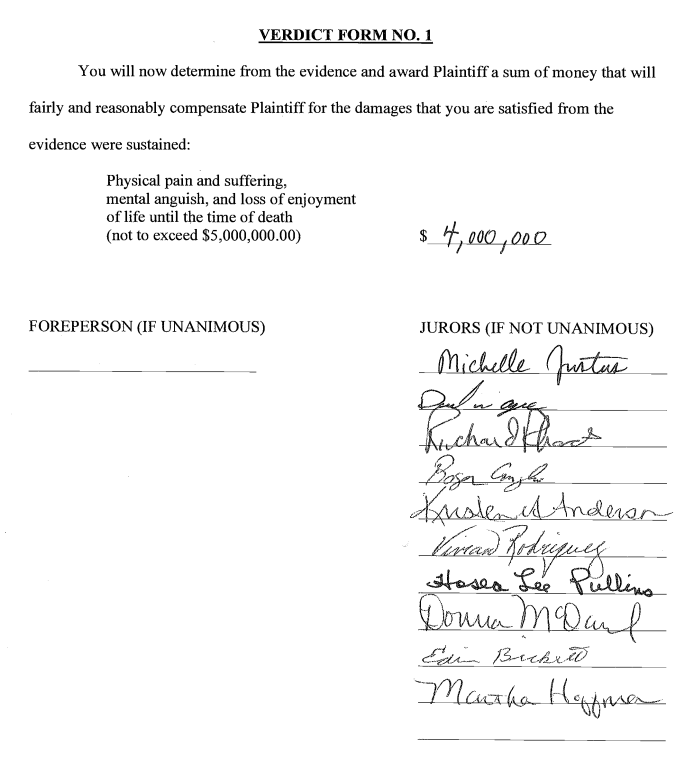
The original verdict was later set aside and a new trial ordered, as explained below.
That history is not something I want hidden in fine print.
It is part of my experience.
And it is part of why I approach Kentucky nursing-home litigation the way I do today.
Frequently Asked Questions About Richmond Nursing Home Cases
Do you handle cases in both Richmond and Berea?
Yes.
Both are in Madison County, and Ross Mann Nursing Home and Medical Negligence Lawyers represents families throughout Madison County and Kentucky.
Why do budget records matter in a nursing-home case?
Because a budget can affect what reaches the bedside.
Staffing, nutritional supplements, equipment, training and other resources all cost money.
Where there is evidence that financial decisions affected required resident care, those decisions may become relevant to the investigation.
Do I need a lawyer whose office is physically in Richmond?
No.
What matters is whether the lawyer understands Kentucky nursing-home litigation and is prepared to handle the case in Madison County.
I have litigated dozens of cases there and tried the Jennings nursing-home case to a Madison County jury.
What does it cost?
We handle nursing-home cases on a contingency-fee basis.
There is no attorney fee unless we obtain a recovery. We explain the fee agreement and responsibility for expenses before representation begins.
Talk to a Richmond KY Nursing Home Abuse and Neglect Lawyer
If someone you love suffered a serious pressure injury, malnutrition, dehydration, contractures, a fall, medication error, infection, sepsis, choking event, elopement, abuse, or other suspected neglect in a Richmond, Berea, or Madison County nursing home, we can investigate what happened.
We start with the resident.
What did this person need?
What did the care plan require?
What did the chart say?
What actually happened?
What resources were available?
What did employees know?
What did management know?
What decisions were made above the bedside?
And did those failures cause or contribute to the resident’s injury or death?
Call Ross Mann Nursing Home and Medical Negligence Lawyers at (859) 413-3900 for a free consultation about a Madison County nursing-home case.
Past results do not guarantee future outcomes.
Important information concerning the Eliza Jennings verdict: A Madison County jury returned an $18 million verdict in 2015. While post-trial motions were pending, the Kentucky Supreme Court decided Overstreet v. Kindred Nursing Centers Limited Partnership, which changed the law governing certain KRS 216.515 residents’ rights claims. The Madison Circuit Court subsequently set aside the Jennings verdict and ordered a new trial because Mrs. Jennings had died before the statutory residents’ rights claims were filed and the court concluded that the residents’ rights evidence and instructions could not be separated from the remaining negligence and punitive-damages issues. The Kentucky Court of Appeals affirmed that ruling in Jennings v. Berea Area Development, LLC, No. 2016-CA-001823-MR (Ky. App. 2018). Accordingly, the original $18 million verdict did not remain in effect.